Purple rice: Health benefits, calories, and nutrition

Purple rice: Health benefits, calories, and nutrition


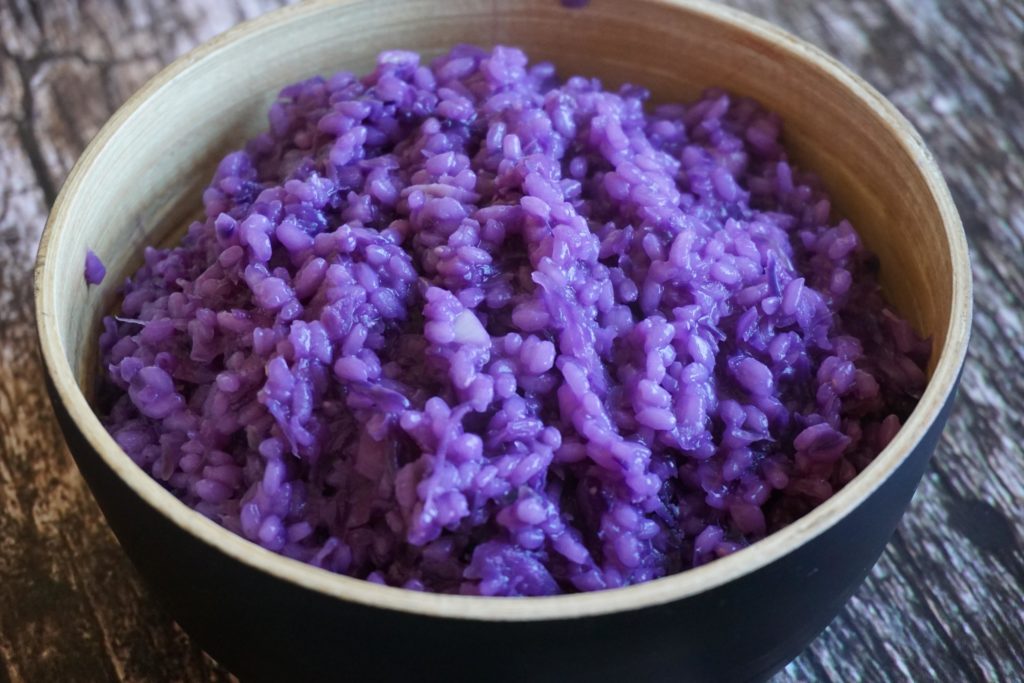
The world has a vast array of rice varieties. Rice varies in texture, size, shape, aroma and stickiness. Rice is also available in a number of colors, including white, brown, red and deep purple. Deep purple rice gets its dark color from its outer coating of black bran. When purple rice is cooked, the bran gives it a nutty flavor and adds to its dietary fiber. Purple rice can be found in many health food stores and organic food stores.

Fast facts on purple rice:
  • It is entirely non-allergenic and gluten-free.
  • It can be used in desserts, and in India is a feature of community feasts.
  • Its purple color is from the antioxidant anthocyanin, which is also found in blueberries.
  • Purple rice can be used in any recipe that calls for rice.


What is in purple rice?

Purple rice has a similar amount of calories as white or brown rice, yet it has more protein and fiber.

Protein

The British Nutrition Foundation state that protein is essential for growth and body repair, as well as the maintenance of good health.

All cells and tissues in the body contain protein, which is involved in a wide range of metabolic interactions.

Protein provides people with 10 to 15 percent of their dietary energy and is one of the most abundant compounds in the body, second only to water.

In the United States, adults are recommended to consume 0.8 grams (g) of protein per kilogram of bodyweight, which is equal to 0.36 g per pound of body weight.

Fiber

Purple rice has a moderate amount of B vitamins and dietary fiber. Eating foods that are high in fiber will help you stay fuller longer after you eat. This may be useful if you are trying to lose weight. Although purple jasmine rice has no dietary fiber, purple sticky rice has 2 g of dietary fiber. The daily recommended fiber intake is 28 g for women and 34 g for men. If you are increasing your fiber intake, do so gradually to avoid gas and stomach cramps.

Calories

As rice has evolved over the years, it has absorbed nutrients from local soils. Therefore, different types of rice will have different nutritional properties. Each variety of rice brings its own unique nutritional benefits to your diet. Purple jasmine rice contains 100 calories per 1/2-cup cooked serving, while purple sticky rice contains 160 calories per the same serving.

Carbohydrates

Rice is rich in carbohydrates and has a small amount of protein. The daily recommended carbohydrate intake is 130 g per day, while the recommended protein intake is 46 g for women and 56 g for men. One serving of purple jasmine rice has 22 g of carbohydrates and 2 g of protein, while one serving of purple sticky rice has 34 g of carbohydrates and 5 g of protein.

Fat

Rice is a low-fat food. Purple jasmine rice contains no fat, and purple sticky rice contains 1.5 g of unsaturated fat per serving. According to the U.S. Dietary Guidelines from the Department of Health and Human Services, fat should account for 25 to 35 percent of your daily calories. Of these, less than 10 percent should be from saturated fats.


The Health Benefits of Purple Rice

One reason why purple rice is so good for your health is that it contains anthocyanin pigments. These are dark pigments which give black and purple rice its unique color and are found in many fruits and berries. According to the Journal of Biomedicine and Biotechnology, anthocyanin pigments are powerful antioxidants that have medicinal benefits and can help rid the body of free radicals.3

Let’s look at the amazing benefits to your health that “forbidden” purple rice can provide you with.

Purple rice has antioxidants

One of the biggest health benefits of purple rice is the high levels of antioxidants it contains. Antioxidants are important to protect cells in the body from damage done by harmful free radicals. Antioxidant compounds help to prevent or reduce the risk of developing various diseases including cancer and heart disease.

It may surprise you, but purple rice actually contains more antioxidants than blueberries. The American Chemical Society published information showing that, like for like, purple rice bran has more anthocyanin antioxidants than blueberries. However, purple rice bran has even more health benefits. It contains more fiber and vitamin E (another essential antioxidant) and less sugar than blueberries. It is also a cheaper source of disease-fighting antioxidants than blueberries.4

Purple rice is anti-inflammatory

Another important health benefit of purple rice is its ability to reduce inflammatory responses in the body. Inflammation is the body’s natural response to protect us from bacterial and viral infections. According to Dr. Weil, chronic inflammation seems to be at the root of many serious illnesses and diseases.5

Research carried out on the anti-inflammatory effects of pigmented rice, found that it contains a number of compounds that help to reduce inflammation.6

Other researchers found that a diet containing purple rice bran helped to suppress inflammatory skin conditions like dermatitis. They concluded by saying that purple rice bran is anti-inflammatory and anti-allergic and can be used to treat and prevent diseases associated with chronic inflammation.7

That study also showed that brown rice had no effect on reducing inflammation in the body. So, that is another reason why purple rice is superior to brown rice.

Cardiovascular (heart) health benefits of purple rice

Including more purple rice in your diet could help to improve the health of your heart and lower blood pressure.

Research published in The Journal of Nutrition found that purple rice helps to increase high-density lipoprotein (HDL) cholesterol.8 This is the type of “good” cholesterol that a healthy cardiovascular system needs to function properly. The study showed that purple rice also helps to prevent hardening of the arteries that can lead to heart failure.

Of course, maintaining a healthy heart is a lifestyle choice and requires enjoying a healthy diet, exercising regularly, and avoiding habits like over drinking and smoking. However, eating more purple rice in your diet will help you to greatly improve your cardiovascular system and let you enjoy better overall health.

Purple rice improves digestive health

Purple rice is a rich source of dietary fiber which is important to keep your digestive system working properly. The proper amount of fiber in your diet helps to prevent constipation and other digestive problems. However, dietary fiber has also been linked with preventing heart disease, high blood pressure, stroke, and elevated blood sugar levels.9

Purple rice can also help you to lose weight. Researchers in South Korea found that women who replaced white rice with a mixture of brown and purple rice saw a significant reduction in body fat and weight. The group that had the purple rice also showed higher levels of “good cholesterol.”10

By replacing white rice in your diet with purple rice, you may find that it’s easier to lose weight and cholesterol at the same time.

Purple rice for liver health

The antioxidant properties of purple rice can also help to detoxify your liver and improve liver function. A healthy liver is necessary to filter out toxins from your blood and break down fats from food. The liver also plays an important role in regulating glucose levels in the blood.

The journal Nutrition & Metabolism published a study showing that black (or purple) rice increased fatty acid metabolism and helped to reduce the risk of elevated blood sugar levels and high cholesterol. There was also a lower risk of developing liver disease thanks to the antioxidant effect of purple rice on the liver.11

Other studies have also shown that the therapeutic properties of purple rice can also help to restore the function of livers that had been damaged by alcohol.12

Purple rice regulates blood sugar levels

As the studies in the previous section show, purple rice helps to regulate blood sugar levels and can be used as an important food to help control diabetes.

In fact, substituting white rice for purple rice in your diet could help prevent you developing type 2 diabetes. White rice is classed as a simple carbohydrate, meaning that it quickly spikes sugar levels. However, the dietary fiber in whole grain rice (for example, purple rice) can help to reduce the risk of type 2 diabetes by almost 40%.13

Purple rice has anticancer effect

The antioxidant anthocyanins in purple rice also helps to protect from cell damage in the body that can cause cancer. In fact, extracts from purple rice have been shown to have an anti-cancer effect and prevent the growth and spread of tumors.

Researchers from Taiwan discovered that, in laboratory conditions, the dark pigments called anthocyanins in purple rice stopped cancer cells from spreading (tumor metastasis).14 Other studies have shown positive results in using the anti-metastasis ability of anthocyanins in preventing breast cancer cells from spreading.15

Of course, more research has to be carried out to see how the antioxidant properties of pigmented rice like purple rice can be used in the treatment of cancer.

Improves brain function

The antioxidant effect of anthocyanins also has a beneficial effect on improving brain function. This means that purple rice can help to improve your memory impairment and prevent or reduce the risk of diseases like Alzheimer’s disease, dementia, and depression.

Various studies into the effects of anthocyanins have found that foods containing these compounds have a beneficial effect on cognitive function. For example, a 6-year long study published in the Annals of Neurology showed that anthocyanin-rich foods (like purple rice) can help slow down the rates of cognitive decline. In fact, the researchers found that on average cognitive aging was delayed by 2 ½ years.16

Clinical studies also showed that anthocyanins helped to improve learning capacity and reduce symptoms of depression. 17

By adding more purple rice to your diet or taking purple rice supplements, you could help to boost your memory and prevent premature cognitive aging.
8 Amazing Health Benefits of Black Rice

8 Amazing Health Benefits of Black Rice


Haven’t heard of black rice? It’s not surprising really, it’s pretty rare compared to its brown and white relatives.

Ancient Chinese lore claims that black rice was reserved solely for the Emperor and the Royal Family, due to its nutritional profile and healing abilities. Back in those days, if you were caught eating it without permission, your life was in jeopardy!

Was the Emperor right when he decided to keep it all to himself? Is black rice worth tracking down for its healthful properties?

Healthy Source of Carbs

White rice isn’t bad for you, but due to the hull being removed, it is lower in nutrients.

Brown rice is a better option, with a higher fiber content. But can black rice beat it?

Here is what a typical serving (one quarter cup, uncooked) of black rice will provide your body with:

  • 160 calories
  • 5 g fat – 2% Recommended Daily Value (RDV)
  • 34 g carbohydrates – 11% RDV
  • 2 g dietary fiber – 8% RDV
  • 1 g sugar
  • 5 g protein
  • No saturated fat
  • No cholesterol
Let’s compare that with brown and white rice.

Brown rice has 170 calories, 45 g of carbs and 4 g of protein, while white rice has 180 calories, 53 g carbs and 3 g protein.

As you can see, black rice is very similar to the other kinds of rice in terms of macronutrition. But, where it takes the lead is in its micronutrient content.

Rich Source of Antioxidants

Where black rice really puts itself ahead of either brown or white rice is when it comes to its antioxidant content.

An analysis of 12 different varieties of rice found that the antioxidant content of black rice was about six times higher than brown or white rice.

Another study found similar results.

Inflammation Fighting

While inflammation is a healthy bodily response to foreign bacteria and viruses, sometimes inflammation can get out of control, which is most definitely not a good thing!

Researchers from the University of Suwon in South Korea carried out animal tests on both black rice bran and brown rice bran for their effectiveness against skin inflammation.

While the brown rice bran didn’t suppress inflammation, the black rice bran did! This led the researchers to suggest that black rice may be a useful ‘therapeutic agent for the treatment and prevention of diseases associated with chronic inflammation’.

Another study, published in the Journal of International Immunopharmacology, found that the main constituent of black rice (C3G) is highly effective at suppressing inflammation in the body.

Of course, you won’t fight chronic inflammation by eating rice alone!


Weight Management

Another supposed health benefit of black rice is helping people reach or maintain a healthy weight.

I have to admit, when it comes to products making claims like this, I’m incredibly skeptical. There are just too many products on the market now that make the same claims.

So does the science back up the claims about black rice and fat fighting?

A 2008 study at the Department of Food and Nutrition at Hanyang University Korea, researchers divided 40 overweight adult women into two groups for a six week study.

One group ate meals containing white rice, while the others ate almost identical meals – the only difference being the white rice was replaced by a mix of black and brown.

Even though both groups had significant reductions in weight, BMI and body fat, the brown/black group enjoyed greater reductions in all three areas, when compared with the white rice group.

Of course, this is just one study. And it featured a mix of black and brown rice.

This makes it difficult to say if black rice is responsible for the extra weight loss, or if it’s simply down to the high fiber content of both black and brown rice.

However, this study (and many others) highlight the importance of fiber in maintaining a healthy weight. Because our bodies digest fiber slowly, high fiber foods keep us fuller for longer, preventing hunger, and cravings.

Heart Health

It goes without saying that keeping a healthy heart is vital for overall health.

The Centers for Disease Control and Prevention states that heart disease is the leading cause of death in the US for both men and women, accounting for one in every four deaths.

Can black rice play a role in a healthier heart?

Some studies seem to suggest it can.

One such study, featured in the Journal of Nutrition, found that black rice decreases atherosclerotic plaque in the arteries.

When this plaque builds up, it causes the arteries to harden and become blocked.

It’s a major risk factor for both heart attack and stroke. In this particular study, male rabbits were injected with high levels of cholesterol in order to cause this plaque formation. They were then divided into five groups, four of which were fed high cholesterol diets, one without rice and the others with various types of rice, including black.

The plaque was 50% lower in rabbits fed black rice (or red rice) than in those fed with white rice. Researchers conclude that the antioxidants in black rice may play a role in reducing atherosclerosis.

That’s a highly artificial situation, but it does indicate black rice might help protect your heart and arteries.


Liver Health

The liver is one of our biggest organs, responsible for processing many nutrients from our food into materials that our body can use and regulating hormones.

According to some studies, black rice can play a role in liver health.

In 2012, the journal Nutrition & Metabolism published a study that examined the effects of black rice extract on non-alcoholic fatty liver disease.

This common condition, which affects up to 90 million Americans (even children!), happens when fatty deposits form on the liver.

Mice with fatty liver disease were fed either a normal fat diet, high fat diet, or a high fat diet supplemented with black rice extract.

After seven weeks, it was found that those mice fed the diet with black rice had improved blood lipid levels and significantly lower levels of triglycerides and total cholesterol than the others.

From this work, researchers were led to believe that black rice may play a role in preventing fatty liver disease.

It’s a bit early to go that far, but it could help you maintain a healthy weight as part of a healthy diet. Maintaining a healthy weight is the most important thing you can do to avoid fatty liver disease.

Cognitive Function

While I didn’t come across any studies that specifically looked at the effects of black rice on memory and learning, there are plenty that link antioxidants, in particular anthocyanin, with brain function.

Some researchers believe oxidative stress contributes to memory impairment, so it makes sense that antioxidants will counteract this to an extent.

A six year study of over 16,000 patients found that eating anthocyanin-rich foods can delay mental aging by up to two and a half years. The results also showed that even greater intakes of anthocyanins and other flavonoids were associated with even slower rates of cognitive decline.

This particular group of antioxidants don’t just slow down the mental aging process, they can also help boost learning and memory.

A 2009 study on rats showed that those treated with anthocyanins displayed improved learning and memory functions, over those that didn’t consume any anthocyanins.

Like I said, these studies don’t specifically link black rice with improved cognitive function, but there are some studies out there linking the main antioxidant in black rice with better memory.

Anti-Cancer Effects

Anthocyanins, like other antioxidants, help protect the body from free-radical damage, which can lead to cancer.

The Journal Chemico-Biological Interactions published a study that looked at the ability of black rice anthocyanins to stop tumor metastasis, the spread of cancer to other parts of the body.

This spread is a significant source of cancer death so scientists are constantly looking at ways to stop this from happening.

It was found in this particular study that the anthocyanins extracted from black rice showed a ‘marked inhibition’ on the spread of certain cancer cells.

A more recent study, from 2014, has also indicated that black rice anthocyanins have the potential to stop tumor metastasis in breast cancer cells.

Other studies show black rice’s ability to fight breast cancer by causing the cancer cells to die.

While these studies show that black rice shows some promise in preventing the spread of cancer, it’s not by any means a cure. Much more research needs to be carried out in this area.


Final Thoughts

Black rice certainly appears to have some health benefits, number one of those being its antioxidant content.

The antioxidant value of this rice doesn’t seem to be in dispute.

Other health effects of black rice, like its weight loss and anti-cancer claims, need a lot more investigation before we can say for sure if it works in these areas.

That said, I’m all for a varied diet so in my opinion any healthy foods should be added in to a healthy eating plan to give us more variety. Black rice is certainly a healthy food!

It also has a unique nutty flavor that I love!

So if you like rice and you like the sound of these health benefits, then by all means try some of this ‘forbidden rice’. Just remember, it’s not a ‘miracle cure’ for anything!

Nutritional & Benefits of Cooked Black Rice

Nutritional & Benefits of Cooked Black Rice


Black rice is an heirloom variety of rice that contains high levels of pigments, which make each grain appear dark purple to black in color. Though the rice has been cultivated for years, black rice is gaining popularity in the American marketplace as an alternative to white rice due to its nutritional benefits. Consuming black rice provides your body with a number of nutrients, including some compounds not found in white or brown rice.

Calories

Consuming black rice provides your body with calories -- the energy your body requires to survive. A 3/4 cup bowl of black rice -- a 6 oz. serving -- contains 160 calories, according to LIVESTRONG.com's MyPlate. If you cook the rice in oil, or add butter to the cooked rice, you can significantly increase the calorie content of the rice: 1 tbsp. of olive oil and butter contains 119 and 100 calories, respectively. If you follow a calorie-controlled diet, or wish to reduce your calorie intake, flavor your black rice with herbs, spices or broths instead of added fat.

Carbohydrates

Most of the calories in black rice come from its carbohydrate content. Each 6 oz. serving of the cooked rice contains 34 g of total carbohydrates, accounting for approximately 80 percent of the calories in the meal. Of those 34 g of carbohydrates, 2 g come from dietary fiber, 1 g from sugars, and the remaining 31 g come from complex carbohydrates, such as starch. Overall, the carbohydrate content in one serving of black rice provides 11 percent of the suggested carbohydrate intake for someone following a 2,000 calorie diet. If you're following a low-carb diet, you should limit your black rice consumption.

Protein

Each serving of black rice also contains some protein. Six ounces of the rice provides 5 g of protein, representing approximately 12 percent of the rice's total calorie content. The protein in black rice contains some of the essential amino acids you require as part of your diet, but fails to provide all nine essential amino acids. To consume complete protein -- one containing all the required amino acids -- Go Ask Alice at Columbia University recommends combining rice with other sources of protein, like beans.

Antioxidants

One nutrient that sets black rice apart from varieties of white rice is antioxidants -- chemicals that may protect against cellular damage. The purple pigments that give black rice its distinctive appearance, called anthocyanins, also prove beneficial for your body. The U.S. Department of Health & Human Services indicates that black rice provides a rich source of anthocyanin antioxidants, as well as vitamin E, a type of antioxidant vitamin. Substituting black rice in place of white or brown rice in your diet can help boost you antioxidant intake, and may benefit your health.
Rice Nutrition Facts & Nutritional Information

Rice Nutrition Facts & Nutritional Information


Rice supplies as much as half the daily calories consumed by half of the world's population, according to the George Mateljan Foundation. In fact, in some cultures, the phrase "to eat" literally means "to eat rice." The popularity of this grain can be attributed, in part, to its nutritional value.
History

According to Edward Sturtevant, brown rice is indigenous to India, from where it was introduced into China more than 3,000 years B.C. The grain was imported as an article of trade to Sicily, Italy, by Arab merchants until the early 15th century. Its cultivation was introduced directly from India to Mediterranean region by the Portuguese in the 16th century. It was first sown in America in 1647, and now the U.S. is one of the largest exporters of this grain.

Significance

Of all the cereals, rice shares equal importance with wheat as a leading food source for humankind, according to the Cambridge World History of Food. This grain is a staple for nearly half of the world’s population. It accounts for fully 60 percent of all food consumption in Southeast Asia and about 35 percent of the food intake in South and East Asia. Although it is grown in more than 100 countries, 95 percent of the world’s rice crop is grown and consumed in Asia.

Nutritional Profile

A one cup serving of cooked white rice contains 205 calories, according to the USDA National Nutrient Database. This provides 10 percent of the daily value for calories, based on a 2,000-calorie diet. Each 1-cup serving of cooked white rice provides 44.51g of carbohydrates, with 0.6g of dietary fiber and 0.1g of sugar, according to the USDA National Nutrient Database. It contains 4.25g of protein, providing 8 percent of the DV for protein. White rice contains no cholesterol.

Vitamins and Minerals

Each 1-cup serving of cooked white rice is also a dietary source for a number of vitamins, according to the USDA National Nutrient Database. These include 0.26mg of thiamin, 2.33mg of niacin and 92mcg of folate. Some of the minerals that it provides are 16mg of calcium, 1.9mg of iron, 68mg of magnesium and 0.75mg of manganese.

Cooking Effects on Nutritional Value

Rice is prepared in several ways by different cultures around the world. According to David Franklin Houston and G.O. Kohler, authors of the book “Nutritional Properties of Rice,” the cooking methods employed to prepare white rice affect the nutritional value of the rice. Because B vitamins are water-soluble, recipes that call for the rice to be rinsed before cooking deplete the dish’s content of this essential vitamin. Similarly, a large proportion of the B vitamins are washed out when the rice is cooked in excess water that is discarded.