Why Is Mental Health Awareness So Important? 10 Daily Habits to Stay Mentally Healthy

Why Is Mental Health Awareness So Important? 10 Daily Habits to Stay Mentally Healthy

Why Is Mental Health Awareness So Important 10 Daily Habits to Stay Mentally Healthy


Mental health awareness refers to recognizing the importance of emotional and psychological well-being, as well as educating individuals about mental health conditions, their symptoms, and the value of timely support and treatment. It is a collective effort aimed at fostering understanding, reducing stigma, and promoting access to appropriate care for individuals affected by mental health challenges.


The foundation of mental health awareness lies in continuous and ongoing efforts.1 By increasing public knowledge about the importance of maintaining good mental health and overall well-being, and by sharing personal experiences, society can reduce the stigma surrounding mental health issues and encourage individuals to seek treatment when needed.


Globally, approximately 20% of adults experience mental health conditions, yet only one in eight adults receive proper mental health treatment.2 This gap highlights the urgent need for greater awareness and improved access to mental health services.


Therefore, mental health awareness as a social movement is crucial because it enhances public understanding and promotes better access to healthcare services for people struggling with mental health issues. It plays a significant role in encouraging early intervention and support.


Mental health awareness is essential to the overall health and well-being of individuals and communities. Increased awareness helps reduce the negative impact of mental illness on individuals, their families, and society as a whole.


The goals of mental health awareness include educating people about available treatment options, the underlying causes of mental health conditions, and the different types of mental health disorders themselves.


Why is Mental Health Awareness Important?

Mental Health Awareness Month educates people about the impact of mental illness on individuals’ lives, regardless of their personal experiences. It also highlights available services and resources for those facing mental health challenges, and promotes ways to advocate for mental health. 3

Raising mental health awareness and engaging in its related activities is important for several reasons, such as:

1. To Reduce Stigma

The stigma surrounding mental health can prevent individuals 4 from seeking help and can lead to discrimination. Raising awareness can help reduce stigma and promote acceptance and understanding.

2. To Increase Access to Resources

Many people may not know where to turn for help with mental health issues. Mental health awareness raises the profile of mental health issues, making it easier for people to access the help and support they need. and support services.

3. To Promote Early Intervention

Early intervention is crucial for treating 5 mental health issues. By raising awareness and promoting early intervention, we can help individuals receive treatment before their symptoms worsen.

4. To Improve Overall Well-being

Mental health issues can impact all aspects 6 of an individual’s life, including relationships, work, and physical health. Raising awareness and promoting mental health can improve overall well-being and quality of life.

5. To Reduce the Economic Impact

Mental health awareness presents a chance for fundraising 7, outreach, and awareness activities, which can aid in financing treatment options, supporting research, and bringing advocates together to establish a more optimistic and promising future for mental health care.
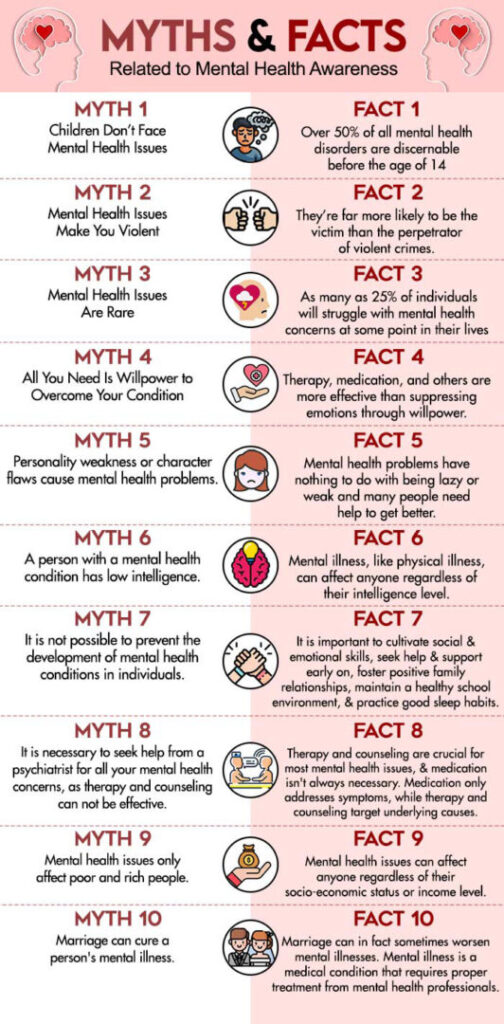
Myths and Facts Related to Mental Health Awareness

Mental Health Awareness in Different Stages of Life

Here are some considerations for mental health awareness in different stages of life:

1. Childhood

Mental health awareness during childhood is crucial 8. It sets the foundation for future mental health and helps children develop resilience. Awareness can also reduce the risk of mental health issues that can arise in adulthood.


2. Adolescence

Mental health awareness is crucial during adolescence because this is a critical period of development when young people undergo significant physical, emotional, and social changes. Adolescents may also face various challenges 9 and stressors, such as academic pressures, peer relationships, family conflict, and identity formation.

It is essential to be aware of the possibility of schizophrenia during adolescence because early intervention is critical for preventing the symptoms of schizophrenia such as hallucinations, delusions, disorganized speech, and social withdrawal.


3. Adulthood

Mental health awareness during adulthood helps recognize signs and symptoms 10, seek treatment, and develop healthy coping strategies.

Additionally, mental health awareness can help to understand the cultural and contextual dimensions of mental-health conditions of youth, making it easier to increase the understanding of the support system without fear of judgment or discrimination.


4. Old Age

Mental health awareness is important in older age 11 because as individuals age, they may face physical and cognitive decline, as well as loss of loved ones and social isolation, which can increase the risk of mental health issues such as depression and anxiety.

To increase awareness of mental health in older age, it is important to educate older adults 12 and their caregivers about the signs and symptoms of mental health issues which can be done through community programs, educational initiatives, and outreach efforts.


Men’s and Women’s Mental Health Awareness

Men and women may require different mental health approaches as they face mental health challenges differently, such as:

1. Gender Differences

Men and women experience different types 13 of mental health issues. Women are more likely to experience depression and anxiety, while men are more likely to experience substance abuse and addiction. Additionally, men are less likely to seek help for mental health issues than women, which can lead to a greater risk of suicide and other negative outcomes.

2. Stigma Associated with a Particular Gender

There is still a significant stigma associated with 14 mental health issues for both men and women, but the stigma can manifest differently depending on gender.

For example, women may be more likely to be labeled as “emotional” or “overreacting” when seeking help for mental health issues, while men may be labeled as “weak” or “unmanly” for seeking help. This can prevent individuals from seeking help and contribute to the negative impact of mental health issues.

This needs to stop. We must put an end to this unfair stigma and ensure that people of every gender feel comfortable getting help when they need it. There’s nothing wrong with asking for help.

3. Promoting Gender Equality

The importance of mental health awareness may promote gender equality 15 by reducing the stigma associated with mental health issues and encouraging individuals of all genders to seek help when needed.


Why Mental Health Awareness Month is Celebrated?

Every year on October 10th 16, World mental health day is celebrated to raise global awareness about mental health issues. Since its inception in 1992, this day has gained significant recognition worldwide. The color green, symbolizing hope, life, and renewal, is associated with this day.

In addition to World mental health day, May is recognized as mental health awareness month and the goals for celebrating 17 mental health awareness month include:

  • To raise awareness about the importance of mental health and mental illness.
  • To promote understanding and empathy for people with mental health conditions.
  • To reduce the stigma surrounding mental health issues.
  • To encourage individuals to seek help when needed.
  • To increase knowledge about mental health issues and treatments facilities.
  • To advocate for improved mental health resources and support services.


How to Spread Awareness about Mental Health

There are several ways to build awareness 18 about the importance of mental health, such as:

  • Promote mental health education in schools and workplaces.
  • Organize mental health awareness events and activities in the community.
  • Encourage open communication and discussion about mental health among family and friends.
  • Share stories and experiences of individuals with mental health issues to reduce stigma and promote understanding.
  • Train healthcare professionals and first responders to recognize and respond to mental health crises.
  • Advocate for improved access to mental health resources and support services.
  • Use social media and other platforms to raise awareness about mental health issues and resources.
  • Partaking in mental health campaigns that are focused on themes such as self-care, stress awareness, etc.

Incorporating the ways to promote mental health awareness in everyday life 19 include:

1. Practice Self-care

Make self-care a priority in your daily routine. That could mean taking breaks when needed, getting enough sleep, eating a healthy diet, or exercising regularly.

2. Be Mindful of Your Mental Health

It is important to pay close attention to your mental health on a regular basis. If you notice any significant changes in your feelings or behaviors, or if you are struggling, you should seek help from a mental health professional right away.


3. Educate Yourself

Read up on mental health issues and resources so you can recognize symptoms, understand treatments, and advocate for yourself and others.

4. Speak Up

Don’t be afraid to talk openly about mental health and share your experiences or knowledge with others. This can help reduce stigma and promote understanding.

5. Prioritize Mental Health in Relationships

EncourageOpenCommunication #SupportMentalHealth

It’s important to support mental health in your relationships with family, friends, and colleagues. To do this, encourage open communication with your loved ones.

6. Create a Safe Space

Foster a safe and supportive environment where mental health can be discussed and addressed without judgment or stigma.

7. The Daily Practice of Yoga and Meditation

Regular yoga and meditation practice can help 20 you to reduce stress and promote overall mental health and well-being.


8. Practice Empathy and Compassion

Show empathy and compassion towards others who may be struggling with mental health issues.


9. Take a Mental Health Screening

Taking a mental health screening can be a proactive step in managing your well-being. It helps identify potential mental health concerns early, offering an opportunity to seek appropriate treatment and support. 21.


10. Join as a Volunteer in a Mental Health Camp

Consider getting involved in a mental health camp or community event as a volunteer. It can help raise awareness about mental health issues and promote access to resources and support for those affected. 22


Takeaway

Promoting mental health awareness is essential in reducing stigma and encouraging individuals to seek help when needed. It can be integrated into daily life by prioritizing mental health in relationships, creating a safe space for discussion, supporting mental health initiatives, practicing self-care, and cultivating empathy. These steps will make it easier to promote mental health and well-being for everyone.


At A Glance

  1. Mental health awareness is important for reducing stigma, promoting understanding, and improving access to resources and support services.
  2. Mental health awareness can be incorporated into everyday life through self-care, education, empathy, speaking up, supporting mental health initiatives, prioritizing mental health in relationships, and creating a safe space for discussion.
  3. Mental health awareness is essential in all phases of life, including childhood, adolescence, adulthood, and old age.
  4. Men’s and women’s mental health awareness differ regarding stigma, prevalence, and treatment approaches.
  5. Mental health awareness month is celebrated to raise awareness about mental health issues and promote understanding.
  6. The ways to promote mental health awareness involve organizing events and activities as well as sharing stories and experiences.


Frequently Asked Questions (FAQs)

1. What are some warning signs of a mental health problem?

Warning signs of a mental health problem can include changes in mood or behavior, difficulty concentrating, withdrawal from friends and family, changes in sleeping or eating habits, substance abuse, and suicidal thoughts or behaviors.

2. Where can I go for help if I struggle with a mental health problem?

There are many resources available for people struggling with mental health problems, including mental health professionals (such as therapists and psychiatrists), support groups, crisis hotlines, and online resources such as self-help websites and forums.

3. How can I help someone who is struggling with a mental health problem?

Anyone can help an individual who is struggling with a mental health problem by offering emotional support, listening without judgment, helping them access professional help, and encouraging them to take care of themselves through healthy habits such as exercise and self-care.

4. What color is Mental Health Awareness Month?

The color associated with Mental Health Awareness Month is green. The color green is often used to symbolize hope, renewal, and good mental health.

5. Who introduced mental health day?

The idea of World Mental Health Day was first proposed by Richard Hunter, the Deputy Secretary General of the World Federation for Mental Health (WFMH), in 1992.

6. Who invented mental health awareness?

Mental Health Awareness Month has been observed in the United States since 1949 and was initiated by the Mental Health America (MHA) organization, which was then known as the National Association for Mental Health. The purpose of this month-long observance is to raise awareness about mental health and reduce the stigma surrounding mental illness.

 What Is Mental Health? Definition of Mental Health

What Is Mental Health? Definition of Mental Health


What Is Mental Health? Mental health includes our emotional, psychological, and social well-being. It affects how we think, feel, and act. It also helps determine how we handle stress, relate to others, and make choices. Mental health is important at every stage of life, from childhood and adolescence through adulthood.

Over the course of your life, if you experience mental health problems, your thinking, mood, and behavior could be affected. Many factors contribute to mental health problems, including:
Biological factors, such as genes or brain chemistry
Life experiences, such as trauma or abuse
Family history of mental health problems

Mental health problems are common but help is available. People with mental health problems can get better and many recover completely.

Early Warning Signs

Not sure if you or someone you know is living with mental health problems? Experiencing one or more of the following feelings or behaviors can be an early warning sign of a problem:

  • Eating or sleeping too much or too little
  • Pulling away from people and usual activities
  • Having low or no energy
  • Feeling numb or like nothing matters
  • Having unexplained aches and pains
  • Feeling helpless or hopeless
  • Smoking, drinking, or using drugs more than usual
  • Feeling unusually confused, forgetful, on edge, angry, upset, worried, or scared
  • Yelling or fighting with family and friends
  • Experiencing severe mood swings that cause problems in relationships
  • Having persistent thoughts and memories you can’t get out of your head
  • Hearing voices or believing things that are not true
  • Thinking of harming yourself or others
  • Inability to perform daily tasks like taking care of your kids or getting to work or school


Mental Health and Wellness

Positive mental health allows people to:
  • Realize their full potential
  • Cope with the stresses of life
  • Work productively
  • Make meaningful contributions to their communities

Ways to maintain positive mental health include:
  • Getting professional help if you need it
  • Connecting with others
  • Staying positive
  • Getting physically active
  • Helping others
  • Getting enough sleep
  • Developing coping skills


''Mental health is about wellness rather than illness''

To make things a bit clearer, some experts have tried coming up with different terms to explain the difference between ‘mental health’ and ‘mental health conditions’. Phrases such as ‘good mental health’, ‘positive mental health’, ‘mental wellbeing’, ‘subjective wellbeing’ and even ‘happiness’ have been proposed by various people to emphasise that mental health is about wellness rather than illness. While some say this has been helpful, others argue that using more words to describe the same thing just adds to the confusion.As a result, others have tried to explain the difference by talking about a continuum where mental health is at one end of the spectrum – represented by feeling good and functioning well – while mental health conditions (or mental illness) are at the other – represented by symptoms that affect people’s thoughts, feelings or behaviour.


The benefits of staying well

Research shows that high levels of mental health are associated with increased learning, creativity and productivity, more pro-social behaviour and positive social relationships, and with improved physical health and life expectancy. In contrast, mental health conditions can cause distress, impact on day-to-day functioning and relationships, and are associated with poor physical health and premature death from suicide.

But it’s important to remember that mental health is complex. The fact that someone is not experiencing a mental health condition doesn’t necessarily mean their mental health is flourishing. Likewise, it’s possible to be diagnosed with a mental health condition while feeling well in many aspects of life. 

Ultimately, mental health is about being cognitively, emotionally and socially healthy – the way we think, feel and develop relationships - and not merely the absence of a mental health condition.


sources : beyondblue , mentalhealth
8 Importance of Mental Health and How to Improve your Mental Wellbeing

8 Importance of Mental Health and How to Improve your Mental Wellbeing

8 Importance of Mental Health and How to Improve your Mental Wellbeing


Mental health is an essential aspect of overall well-being that affects how we think, feel, and act. It plays a crucial role in our daily lives, influencing our relationships, work productivity, and overall quality of life. Taking care of our mental health should be a top priority, and there are various ways we can improve our mental wellbeing. 


Here are eight key reasons why mental health is important:

  1. Overall well-being: Mental health is essential for our overall well-being. It affects how we think, feel, and act, influencing our ability to handle stress, maintain relationships, and make meaningful contributions to society.
  2. Physical health: Mental health has a significant impact on physical health. Poor mental health can lead to increased risk of developing various physical health problems, including cardiovascular disease, weakened immune system, and chronic pain.
  3. Productivity and performance: Good mental health is crucial for optimal productivity and performance in all areas of life. When we have positive mental health, we are better able to focus, concentrate, and make effective decisions, leading to improved academic or work performance.
  4. Relationships and social connections: Mental health plays a vital role in maintaining healthy relationships and social connections. It enables us to build and nurture meaningful relationships, communicate effectively, and develop empathy and understanding towards others.
  5. Resilience and coping skills: Mental health equips us with the necessary resilience and coping skills to navigate life’s challenges and setbacks. It helps us bounce back from adversity, manage stress, and adapt to change, fostering greater emotional strength and stability.
  6. Self-esteem and self-confidence: Good mental health positively influences our self-esteem and self-confidence. When we have a positive self-image and belief in our abilities, we are more likely to set and achieve goals, take on new challenges, and maintain a positive outlook on life.
  7. Prevention of mental health disorders: Prioritizing mental health can help prevent the onset or progression of mental health disorders. By practicing self-care, stress management, and seeking support when needed, individuals can reduce the risk of developing mental health conditions or minimize their impact.
  8. Reduced stigma: Promoting mental health reduces the stigma associated with mental health conditions. It encourages open dialogue, acceptance, and understanding, allowing individuals to seek help without fear of judgment or discrimination. This leads to improved access to mental health services and better overall support for those in need.

It is essential to prioritize mental health on both individual and societal levels to ensure a healthier, happier, and more productive population. By acknowledging its significance, we can work towards creating environments that foster positive mental health and well-being for all.


How to improve mental well-being? 

Improving mental well-being is a proactive process that involves adopting various strategies and habits. Here are some suggestions to help enhance your mental well-being:

  1. Prioritize self-care: Take care of your physical, emotional, and mental needs. Get enough sleep, eat a balanced diet, engage in regular physical activity, and set aside time for activities you enjoy.
  2. Build and maintain social connections: Foster healthy relationships with family, friends, and your community. Stay connected, engage in meaningful conversations, and seek support when needed.
  3. Practice stress management: Develop effective stress management techniques that work for you. This may include deep breathing exercises, meditation, mindfulness, yoga, or engaging in hobbies that help you relax and unwind.
  4. Set realistic goals: Establish clear and achievable goals in different areas of your life. Break them down into smaller, manageable steps to help you stay motivated and experience a sense of accomplishment.
  5. Engage in activities you enjoy: Make time for activities that bring you joy and fulfillment. Engaging in hobbies, creative pursuits, or activities that make you feel good can have a positive impact on your mental well-being.
  6. Seek support when needed: Don’t hesitate to reach out to trusted friends, family members, or mental health professionals if you’re experiencing challenges or need someone to talk to. Seeking support is a sign of strength, and it can provide valuable perspectives and guidance.
  7. Practice self-compassion: Be kind to yourself and practice self-compassion. Treat yourself with the same understanding and support you would offer to a loved one facing similar challenges or setbacks.
  8. Limit exposure to negativity: Minimize exposure to negative influences, whether it’s certain people, news, or social media content that negatively impacts your mental well-being. Surround yourself with positivity and focus on things that uplift and inspire you.
  9. Maintain a healthy work-life balance: Strive for a balance between work, personal life, and leisure activities. Set boundaries to avoid overworking and allow yourself time for relaxation, hobbies, and spending quality time with loved ones.
  10. Practice gratitude: Cultivate a mindset of gratitude by acknowledging and appreciating the positive aspects of your life. Regularly reflect on things you are grateful for, which can help shift your perspective and promote a more positive outlook.

Remember, improving mental well-being is a journey, and it may require experimentation and adjustments to find what works best for you. If you’re experiencing persistent or severe mental health challenges, it’s important to seek professional help from a qualified mental health practitioner.


Here’s the Penalty for Not Having Health Insurance

Here’s the Penalty for Not Having Health Insurance


The Affordable Care Act, or ACA, requires that most Americans buy health insurance — but not everyone signed up, and not everyone who did sign up kept their coverage. Millions could owe a tax penalty for not having health insurance, a fee that’s sometimes called the Obamacare penalty.


Who pays a penalty for no health insurance


If you go more than three full, consecutive months without health insurance, you might have to pay a tax penalty for that year. If you have health insurance for only one day of a month, it counts as a month with health insurance.

Here’s an example: Say you go without health insurance for all of January and February. Then you buy health insurance and it goes into effect on the last day of March. You would not be subject to a tax penalty for no health insurancebecause you didn’t go without a health plan for three full, consecutive months.


Cost of health insurance penalty


The penalty is calculated in one of two ways: either as a percentage of your total household adjusted gross income or a flat rate, whichever is greater.
  • For tax year 2017, the penalty is 2.5% of your total household adjusted gross income, or $695 per adult and $347.50 per child, up to a maximum of $2,085.
  • For tax year 2018 and beyond, the penalty amounts have not been announced, but are expected to increase.

A tax preparer, if you have one, or tax software can calculate any penalty for not having health insurance. Note that for the 2017 tax year, the IRS won’t automatically reject tax returns that don’t disclose whether you have health insurance. But taxpayers who don’t answer the health insurance question may be contacted for follow-up, according to the IRS.
 
Exemptions from health insurance penalty


If you qualify for an exemption under the ACA, you won’t be charged a penalty for not having health insurance. You won’t have to pay a fee if:
  • The most affordable coverage costs more than 8.13% of your household income
  • You were uninsured for less than three consecutive months of the year
  • You are exempt from filing a tax return because your income is too low
  • You are Native American or eligible for health services through an Indian Health Services provider
  • Your religion objects to the use of insurance
  • You’re in prison
  • You belong to a health care sharing ministry
  • You have been abroad for more than one year
  • You qualify for a hardship exemption due to an issue such as homelessness, bankruptcy, eviction or similarly trying circumstances, listed here.

If you believe you qualify for an exemption, you can claim it when you file your tax return, or apply for an exemption on the Healthcare.gov website.

Buying health insurance and avoiding a penalty


If you can’t get health insurance through a workplace, the health insurance marketplace at Healthcare.gov is a good place to start. You can search for plans and prices there, or be directed to your state’s marketplace.

Open enrollment for ACA health plans — during which you can sign up for coverage for the next year — only lasts for 45 days: Nov. 1 to Dec. 15, 2017. Outside of open enrollment, you may be able to sign up if you have a qualifying life event, such as a recent marriage, divorce or birth.


The 10 Best Health Podcasts for Women

The 10 Best Health Podcasts for Women

When it comes to getting healthy, we want to surround ourselves with constant motivation, inspiration, and knowledge that help us to create the healthy lifestyle we want. And what better way to surround yourself with awesome information and inspiration than listening to the best health and fitness podcasts out there.


As an avid listener of podcasts and a woman concerned with health and wellness (both my own and that of my family), I have listened to A LOT of different health podcasts. But this list is comprised of the absolute best health podcasts for women in 2021.

The 10 Best Health Podcasts for Women


Since being healthy is a lot more than just eating the right foods and moving enough, this list includes podcasts that cover all aspects of health: from physical wellbeing to mental health. You’ll find array of health podcasts that will help you feel better in your body and soul.

Let’s dive in!


The Food Psych

The Food Psych Podcast is, hands-down, one of the best health podcasts for women that exists. If you’re looking to heal your relationship with food, feel good in your own skin, and find true health and wellness then this podcast is for you.

The host, Christy Harrison, is a no-nonsense registered dietitian who promotes intuitive eating and Health At Every Size, two approaches that promote both mental and physical wellbeing.

As someone who has struggled with weight fluctuations and a fraught relationship with food, this podcast speaks to my soul. I’ve been binging every single episode and I’ve yet to listen to one that hasn’t rocked my world–in the best way possible. Give it a listen and let me know what you think.

And her recent book Anti-Diet is purely mind blowing. One of the best books I’ve read to improve my health and wellness. 

Great For: Breaking free from diet culture, getting in a healthy headspace, and learning to listen to your body.


Losing 100lbs

Losing 100lbs is a health podcast from the fabulous Corinne Crabtree, who lost over 100lbs 14 years ago and has kept it off.

A certified life coach and health coach, Corrine comes at weight loss from a very different way than others. Instead if giving a ton of eating rules and a specific “diet”, she focuses on tackling the emotional and mental causes of overeating and weight gain. She focuses on cleaning your mind and making sustainable changes.

Corinne is beyond lovable with her southern accent, penchant for swearing, and ability to “tell it like it is”. She gets very real with the emotional and physical struggle with weight while giving practical no nonsense approaches.

Great For: Changing your mindset around food and fitness, healing your emotional relationship with food, and having real and honest discussions about the emotional and physical toll of being overweight.


The Doctor’s Farmacy

Through interviews with leading medical professionals and discussions on the current research, This podcast delves into the deep issues of health, wellness, food, and politics in an effort to education and inspire people to use food to heal their bodies. The host, Dr. Mark Hyman, believes that healthy foods are going to heal our sick society.

I’ve been a huge fan of Dr. Hyman since I did his 10-Day Detox program and literally felt the best I ever had in my life! While always skeptical of quacks (*cough* Dr. Oz ), Mark Hyman always comes with the reciepts (backs up everything with research)and he always seems very balanced and rational.

I also love his book Food: What the Heck Should I Eat as it’s an amazing guide on food and all what years of research tells us.

Great For: Understanding the science behind what we eat and gaining important nutritional knowledge


10% Happier

Through interviews with all sorts of fascinating people, The 10% Happier Podcast seeks to answer the question “Can you be an ambitious person and still strive for enlightenment (whatever that means)?”

The podcast is hosted by Dan Harris, a journalist and self-described “fidgety skeptic” whose on-air panic attack eventually led him to meditation and an exploration into “enlightenment”.

Harris is a great interviewer and the guests are diverse and super interesting.

Great For: Getting ideas to have more mental and emotional peace and “enlightenment”


Science Vs.

While Science Vs. isn’t strictly a “health” podcast, per se, they tackle some of the biggest health fad and issues out there like fasting diets, keto, and detoxes & cleanses and see how they stack up against the science. And let’s be honest–so much of diet culture has very little grounding in science.

It’s both fascinating, and crazy entertaining. I’ll be listening at the gym and suddenly start laughing out loud. The Aussie host, Wendy Zukerman, is absolutely hilarious and the show is meticulously researched and exquisitely produced. Do yourself a listen and give it a listen!

(You can even start with the health episodes links above…)

Great For: Getting solid scientific information about conventional wisdom and health fads–and being wildly entertained.


The Wellness Mama

The Wellness Mama is a natural living podcast that covers a variety of health topics including food, stress, sleep, fitness, and toxins. Through interviews with experts, the host Katie Wells (a successful health blogger), gives you actionable steps to improve your family’s health.

Great For: Getting information that can help you make better, more informed choices for your family.


The Model Health Show

I was first introduced to the host Shawn Stevenson through his fantastic book Sleep Smarter, which helped me to drastically improve my sleep (a miracle for any mom of small kids). So when I found out he had a health and fitness podcast, I started to give The Model Health Show a listen.

Through interviews with leading experts, you’ll walk away with the knowledge to create a healthier lifestyle.

Great For: Getting a broad understanding of health, nutrition, and exercise.


Affirmations Pod

Reciting affirmations can be super powerful strategy for improving mindset, finding peace, and improving mental health. Not only will you get fantastic affirmations on the Affirmations Pod that you can repeat, but you’ll find that simply listening is super relaxing. The host, Josie Ong, has an incredibly calming voice.

I often listen when I’m feeling anxious or overwhelmed and find that it immediately takes me down several notches.

Great For: Finding peace, relaxation, and powerful affirmations.


The Mindful Kind

Mindfulness is powerful tool for improving all-around health, from mindful eating to more mindful exercise. And in The Mindful Kind, host Rachael Cable gives really simple and easy practices to increase mindfulness in her calm, kind-hearted manner.

Episodes are short, peaceful, and give practical ways to live life more mindfully. Give it a listen!

Great For: Feeling calm and increasing mindfulness.


Blackberry Nutrition Facts And 10 Health Benefits

Blackberry Nutrition Facts And 10 Health Benefits

Blackberry Nutrition Facts And 10 Health Benefits

Blackberries are delicious and nutritious fruits that offer a wide range of health benefits. In this article, we’ll look at what’s in blackberries and ten big ways they can help you stay healthy.

Blackberries are a fruit that doesn’t have many calories but has lots of fiber, vitamins, and minerals.

One cup of blackberries has only 62 calories but lots of good things for you. It has a lot of vitamin C, which helps your body fight off sickness and makes your skin healthy.

Blackberries also have a good amount of vitamin K, which helps your blood clot and keeps your bones strong.

On top of that, they have antioxidants like anthocyanins, which can help bring down swelling in your body and protect you from diseases like heart disease and some cancers.

Here is the approximate nutritional information for 100 grams of fresh blackberries:

NutrientAmount
Energy43 kcal
Protein1.4 g
Total Fat0.5 g
Saturated fat0.02 g
Trans fat0 g
Cholesterol0 mg
Carbohydrate9.6 g
Dietary Fiber5.3 g
Sugars4.9 g
Vitamin A214 IU
Vitamin C21 mg
Vitamin K20 μg
Vitamin E1.17 mg
Calcium29 mg
Iron0.6 mg
Potassium162 mg
Magnesium20 mg
Phosphorus22 mg


Health Benefits of Blackberries

Blackberries have lots of health benefits because they have so many good things in them.


Vitamin C and Immune Health

Blackberries are great for getting vitamin C, with one cup giving about 35% of what you need each day.

Vitamin C helps your body fight off sickness and keeps you from getting infections. It helps make white blood cells, which help keep you healthy.

Also, vitamin C helps keep your body’s cells safe from damage.

Studies have shown that eating foods like blackberries, which have lots of vitamin C, can help you get over colds faster.

So, make sure to eat blackberries to help your body fight off sickness!


High Fiber Content and Digestive Health

Each cup of blackberries has about 8 grams of fiber.

Fiber helps your digestion by making sure you go to the bathroom regularly and not getting constipated. It helps make your stool softer, which makes it easier to pass.

Also, fiber feeds good bacteria in your gut, which helps your gut stay healthy. Studies have shown that a healthy gut can help with digestion and overall health.

The fiber in blackberries also helps control blood sugar by slowing down how fast sugar gets into your blood. This can help prevent type 2 diabetes.


Vitamin K and Bone Health

Vitamin K helps make a protein called osteocalcin, which helps bind calcium to bones.

Blackberries have a lot of vitamin K, with one cup giving about 29% of what you need each day. This makes them great for a diet that helps keep your bones healthy.

Studies have shown that people who get a lot of vitamin K are less likely to break a bone and have stronger bones. Vitamin K also helps keep calcium in the bones, which helps them stay strong.


Manganese and Metabolic Health

After talking about vitamin K for bone health, let’s talk about another good thing in blackberries: manganese.

Manganese helps keep your metabolism healthy. It helps with energy and protects against damage. Manganese also helps make collagen, which is important for healthy skin and connective tissues.

Studies have shown that getting enough manganese can help with many aspects of health. It can help control blood sugar, support the thyroid, and help your brain work well. Also, manganese has antioxidant properties that can help keep cells safe from damage.


Brain Health

Blackberries have lots of health benefits for the brain. They have antioxidants that protect the brain from damage and inflammation, which can cause problems as you age.

Also, blackberries have lots of vitamins C and E, which can help improve memory and how well your brain works. The high fiber content of blackberries also helps the brain by keeping the gut healthy, which is connected to the brain.

Furthermore, the anthocyanins in blackberries have been linked to improved communication between brain cells and better learning ability.


Oral Health

Blackberries are not only tasty but also provide many health benefits for your mouth.

The high amounts of manganese in blackberries help make collagen, which helps keep gums and teeth healthy.

Also, blackberries have powerful antioxidants that can help reduce inflammation and prevent gum disease.

Studies have shown that the polyphenols in blackberries can kill harmful bacteria in the mouth.

Also, the vitamin C in blackberries helps keep gums healthy and helps wounds heal.


Heart Health

These small, juicy fruits also have lots of benefits for heart health. Blackberries have high levels of antioxidants, which help reduce inflammation and damage in the body.

Studies have shown that eating blackberries can lower blood pressure and improve cholesterol levels, reducing the risk of heart disease.

Also, the fiber in blackberries helps control blood sugar levels and helps maintain a healthy weight, both of which are important for a healthy heart.


Antioxidant Benefits

Blackberries are full of powerful antioxidants, which help keep your heart healthy by reducing inflammation and damage in the body.

These small but powerful fruits are rich in anthocyanins, which give them their deep purple color and provide many health benefits.

Studies have shown that eating blackberries regularly can help lower blood pressure, improve cholesterol levels, and reduce the risk of heart disease.

The antioxidants in blackberries also protect against free radicals, which can damage cells and lead to diseases like cancer and heart problems.

Also, blackberries have lots of fiber, which helps maintain a healthy weight and promotes regular bowel movements.


Cholesterol Control

To keep your cholesterol levels healthy, it is recommended to eat blackberries. Blackberries can reduce inflammation and damage, thanks to their antioxidants like anthocyanins.

These antioxidants can lower bad cholesterol levels and increase good cholesterol levels. They do this by preventing bad cholesterol from getting oxidized, which reduces plaque in the arteries and improves heart health.

In addition to their antioxidant properties, blackberries are also a great source of fiber. This fiber can help lower cholesterol levels by binding to cholesterol in the digestive system and helping get rid of it.


Teeth and Brain Benefits

Eating blackberries can have good effects on your dental health and brain. Blackberries have lots of things that support overall mouth health.

They have lots of vitamin C, which helps prevent gum disease by keeping gums healthy and preventing damage to the tissues in the mouth.

Also, blackberries have lots of antioxidants, which reduce inflammation and fight harmful bacteria that can lead to cavities.

Also, the powerful antioxidants in blackberries help improve brain function. Studies have shown that these antioxidants protect brain cells from damage and inflammation, possibly reducing the risk of problems with thinking as you age and diseases like Alzheimer’s.

The flavonoids in blackberries also play a role in improving memory and overall brain health.


Incorporating Blackberries into Your Diet

One easy way to get the health benefits of blackberries is by adding them to your morning smoothie.

Blackberries are a fruit that can be used in many different dishes and drinks, giving a burst of flavor along with lots of health benefits.

References

A Few Things that Ruin Your Thyroid Health and One Recipe That Can Fix These Problems

A Few Things that Ruin Your Thyroid Health and One Recipe That Can Fix These Problems

A Few Things that Ruin Your Thyroid Health and One Recipe That Can Fix These Problems

The thyroid gland is an important part of the endocrine system and plays a critical role in regulating various bodily functions, including metabolism, hormone production, and growth. It is a small, butterfly-shaped gland located in the neck and is responsible for producing thyroid hormones that control many aspects of our health. Unfortunately, many people unknowingly engage in habits that can harm their thyroid health and lead to a range of health problems.


Poor diet, stress, environmental toxins, and lack of exercise are some of the common factors that can harm your thyroid health. A diet that's high in processed foods, refined sugars, and unhealthy fats can lead to inflammation, which can damage your thyroid gland. Additionally, chronic stress can disrupt the hypothalamus-pituitary-thyroid (HPT) axis, which is responsible for regulating thyroid hormone production, leading to fluctuations in thyroid hormone levels. Exposure to environmental toxins like heavy metals and pollutants can also interfere with thyroid hormone production and cause inflammation in the thyroid gland.


In this article, we'll explore a few things that can ruin your thyroid health and share a recipe that can help fix these problems. We'll also provide some tips on how to keep your thyroid healthy, including a healthy diet, exercise, and reducing stress levels. By understanding the factors that can harm your thyroid health and taking steps to support your thyroid gland, you can maintain good overall health and wellbeing.


  1. Poor diet 

    Your diet plays a significant role in your thyroid health. A diet that's high in processed foods, refined sugars, and unhealthy fats can lead to inflammation, which can damage your thyroid gland. Additionally, low levels of nutrients like iodine, zinc, and selenium can also harm your thyroid health. To keep your thyroid healthy, make sure you're eating a diet rich in whole foods, including plenty of fruits, vegetables, and lean proteins.

  2. Stress 

    Stress can have a significant impact on your thyroid health. Chronic stress can disrupt the hypothalamus-pituitary-thyroid (HPT) axis, which is responsible for regulating thyroid hormone production. This disruption can cause your thyroid hormone levels to fluctuate, leading to a range of health problems. To reduce stress, try incorporating relaxation techniques into your daily routine, such as deep breathing exercises, meditation, or yoga.

  3. Environmental toxins 

    Environmental toxins like heavy metals, pesticides, and pollutants can harm your thyroid health. These toxins can interfere with thyroid hormone production and cause inflammation in the thyroid gland. To minimize your exposure to environmental toxins, try to eat organic produce, filter your drinking water, and avoid using products that contain harmful chemicals.

  4. Lack of exercise 

    Exercise is essential for maintaining good thyroid health. Regular exercise helps to stimulate thyroid hormone production and improve the efficiency of the thyroid gland. Additionally, exercise can help to reduce stress levels, which can further benefit your thyroid health.


Now that we've covered a few things that can harm your thyroid health let's explore a recipe that can help fix these problems. One great recipe for thyroid health is a thyroid-boosting smoothie. Here's how to make it:

Thyroid-Boosting Smoothie Recipe Ingredients:

  • 1 cup unsweetened almond milk
  • 1 ripe banana
  • 1/2 cup frozen blueberries
  • 1/4 cup rolled oats
  • 1 tbsp almond butter
  • 1 tsp maca powder
  • 1/2 tsp ground cinnamon

Instructions:

  1. Add all ingredients to a blender and blend until smooth.
  2. Enjoy immediately.

This smoothie is packed with nutrients that can benefit your thyroid health. The banana provides potassium, which can help to regulate thyroid hormone production. The blueberries are rich in antioxidants, which can help to reduce inflammation in the thyroid gland. The almond butter provides healthy fats, which can support thyroid function. The maca powder can help to balance hormone levels, while the cinnamon can help to regulate blood sugar levels.


In conclusion, there are several things that can harm your thyroid health, including poor diet, stress, environmental toxins, and lack of exercise. To keep your thyroid healthy, try to eat a diet rich in whole foods, practice relaxation techniques to reduce stress, minimize your exposure to environmental toxins, and make sure to get regular exercise. Additionally, you can try incorporating thyroid-boosting foods like bananas, blueberries, almonds, and maca powder into your diet to support thyroid health.

How to Improve Your Health by Taking Care of Your Teeth

How to Improve Your Health by Taking Care of Your Teeth

How to Improve Your Health by Taking Care of Your Teeth

Oral health is much more than only “oral health”. If you think that oral health only covers teeth, gums, tongue, and the upper throat, etc., you are living with a myth. It is much more than your mouth. Your oral health is directly or indirectly linked with almost every vital organ of your body. If you are not maintaining good oral hygiene, or you’re ignoring your oral problems, you may suffer from some serious illness.


Taking care of your oral health will also ensure better physical and mental health. Your mouth is the entrance of the whole of your health, and if it is healthy, there are high chances that your physical and mental health is also okay.


Here are some tips on how to improve your health by taking care of your teeth.

 Brush your teeth, thoroughly, at least twice a day:

Although, morning is usually the most preferred time for brushing. But you should brush your teeth after every meal. If you can’t do that, brush them at least twice a day. Brush your teeth thoroughly ensuring that each tooth is covered.

Toothbrush with a small head and soft bristles are best for people of almost all ages. If you can get toothpaste with fluoride, that’s even better, as fluoride strengthens the teeth enamel and reduces the risk of tooth decay.


Floss your teeth at least once daily:

Tiny food particles may remain between the teeth even after brushing and can make your teeth and gums unhealthy. You should floss your teeth at least once daily to avoid such problems.


 Reduce the intake of acidic drinks:

Acidic drinks are extremely harmful for your health. Regular intake of them can cause a lot of health problems, including tooth decay, swelling and sensitivity of gums, cracked or broken teeth, and periodontitis etc. In severe cases, the teeth may even get “eaten” down to the gums. So, if you are taking high amount of acidic drinks, start limiting them to ensure good oral health.


Limit Sugary Foods:

A high intake of sugary foods is harmful to your health in a lot of ways. They can cause dental plaque which changes sugars into acids. Speedy conversion of sugars into acids can cause mild to severe problems including acidity, heartburn, injuries to the internal intestinal walls, etc.

So, if you want to ensure good oral health, limit your sugar intake.


Protect your teeth from injury:

Injury to your teeth can be extremely dangerous in a lot of ways. It can be responsible for some other health issues as well. So, protect your teeth in the best possible way, especially when you playing a sport. Wearing a full-face helmet or mouthguard can be helpful.


Your teeth are only for chewing foods:

Always remember that your teeth are only for chewing food items. If you use them for removing bottle tops, cracking nuts, or opening packaging, you may have chipped or broken teeth.


Don’t throw out the knocked-out tooth:

If you suffer from an injury, and your tooth is knocked out, try to keep it safely. If possible, try to place the it back in your mouth while seeking immediate medical attention. If keeping it back in mouth is not possible, wrap the tooth properly in plastic and take it while going to your dentist.


Go for a regular dental check-up:

Try to visit your dentist regularly, even if you don’t have dental problems. It will help you to take care of your teeth in a more professional manner.

Taking care of your oral health is very important in every aspect. As we have already discussed, oral health is interlinked with your overall physical and mental health. If you feel even a minor problem to your oral cavity, don’t ignore it and get proper medical attention.

7 Proven Tips to Improve Your Oral Health

7 Proven Tips to Improve Your Oral Health

Proven Oral Health Tips

A healthy mouth has always been the top-most priority for many people. It isn’t only related to an ideal physical body but also enhances self-esteem and social interaction.

Our mouth is the one and only gateway to all of our body. It can often be a signal to other health diseases as well.
7 Proven Tips to Improve Your Oral Health


When talking about oral health, a bright smile and straight teeth should be (although rarely are) the least concerning of things.

Healthy gums and teeth should be the most important part of your mouth.

Here are 7 oral health tips to improve your oral health.
 
7 Oral Hygiene Tips: Improve Your Oral Health

As this article talks about improving your oral health and avoiding oral health problems, here are some great oral hygiene tips to help you maintain a healthy mouth.
 
Visit Your Dentist Regularly

Regular visits to your dentist are key to maintaining good oral health and avoiding future oral health problems. Your dental hygienist and dentist can help your maintain optimal oral health by discovering dental problems in their early stages.

Routine cleanings will remove plaque and hardened build up from your teeth.

Plaque and hardened build up (calculus/tartar) can cause many issues. If left on your teeth and gums, they can cause gum disease such as gingivitis and periodontal disease and can also cause tooth decay.

It is recommended you visit your dentist for routine dental cleanings and exams at least every 6 months or twice per year.

Avoid Hidden Sugars in Products You Use


Most often, oral health problems come from unwanted sugar. A large amount of sugar is added to our drinks and retail products – including the products claiming to be healthier for you.

Guess what?

Long-term consumption of sugar is the foundation of tooth decay.

According to American Heart Association recommends reductions in the intake of added sugars. They recommend men get no more than 37.5 and women intake no more than 25 added sugars per day.

Don’t Rinse After Brushing


Rinsing your teeth after brushing is a trait followed worldwide.

It is quite common to wash your mouth out after brushing your teeth. And if you’re doing the same, you’re abandoning an important benefit of toothpaste.

The fluoride present in the toothpaste protects our teeth from germs and acid attacks. And by rinsing the mouth after brushing teeth, you’re just rinsing a protection shield down the drain.
 
Floss Is Important

Make sure to floss at least once a day. It will help you get out the food that’s out of the reach of your toothbrush. You can do it any time of the day let it be morning, noon, evening, or night.

The main objective is to just do it!
 
Fluoridated Tap Water

If you’re living in an area with fluoridated water, tap water can be a best friend to your oral hygiene.

Throughout the day, exposure to some fluoride every time you drink water protects your teeth from bacteria and acid – avoiding a lot of oral health problems.
 
Quit Smoking

Above anything else, smoking is one of the worst things you can do to your oral health. It affects both the teeth and gums.

Smoking can badly affect your healthy gums and teeth.

Setting aside oral hygiene, quitting smoking will heighten your sense of smell and taste, reduce the risk of oral cancer, and gum problems.
 
Brush Twice a Day

Last but not least, make sure to brush your teeth at least twice a day.

This is probably the most common oral hygiene tip you’ve been hearing since forever. But that’s because it is important!

Brushing your teeth regularly removes the plaque and food trapped in your gums and teeth – leading to ideal oral hygiene.

In a nutshell, oral health problems can easily be avoided following a simple hygiene schedule. The above-mentioned tips can easily help you maintain a healthy mouth.

If your oral condition is bad, it is recommended to visit a dentist for a thorough cleaning and exam while also following the above tips.

Keep following to learn more about maintaining healthy gums, avoiding oral health problems, and more.

Kelly is a registered dental hygienist and oral health care provider. She is passionate about oral hygiene and encourages people to achieve optimal oral health. She has been working in the dental profession for 16 years and worked in many different roles in the dental industry. Kelly is currently a pediatric dental hygienist specializing in children’s dentistry. She is committed to helping others with their oral health care issues and helping others achieve a smile they love.

This article and all advice on this website, Toothbrush Life, is intended to help people gain knowledge about general oral health topics. No articles or advice on this website are intended to replace professional advice, diagnosis or treatment. Always seek the advice of your dentist or qualified healthcare provider to help you with any questions you have regarding a medical condition or treatment.
4 Private Part Tips Every Woman Should Know

4 Private Part Tips Every Woman Should Know

4 Private Part Tips Every Woman Should Know

Maintaining good vaginal health is a vital aspect of a woman's overall health and well-being. Despite its importance, many women find it challenging to navigate the plethora of information available and determine the most effective tips for maintaining good vaginal health. Whether it's due to lack of knowledge or simply not knowing where to start, taking care of one's vaginal health can seem like a daunting task. However, with a few simple tips and a little bit of effort, every woman can maintain optimal vaginal health and reduce the risk of unpleasant and painful conditions.


The vaginal area is delicate and susceptible to a variety of conditions and infections that can cause discomfort, pain, and even long-term health problems. From not wiping properly after using the bathroom to wearing tight, synthetic clothing, there are a number of common habits that can have a negative impact on vaginal health. By being aware of these habits and avoiding them, women can take an important step in protecting their vaginal health.


In this article, we will explore 4 private part tips that every woman should know to help maintain optimal vaginal health. These tips are designed to be simple, straightforward, and easy to follow, making it easier for women to take control of their vaginal health and reduce the risk of unpleasant and painful conditions. Whether you are a young woman just starting to think about your vaginal health or an older woman looking for ways to maintain optimal health, these tips can help you achieve your goals and keep your vaginal area healthy and happy.


  1. Keep it clean: Keeping your vaginal area clean is essential for maintaining good health. Use mild, fragrance-free soap to clean the area and avoid using douches, as they can disrupt the delicate balance of bacteria in the vagina. When wiping after using the bathroom, be sure to wipe from front to back to avoid transferring bacteria from the rectum to the vulva.

  2. Wear breathable clothing: Wearing tight, synthetic clothing can cause friction and chafing, leading to irritation and infection. To reduce the risk of irritation and infection, opt for loose-fitting, breathable clothing made from natural fibers like cotton.

  3. Stay hydrated: Staying hydrated is important for overall health, including vaginal health. Drinking plenty of water can help keep the vaginal area moist and reduce the risk of irritation and infection.

  4. Practice safe sex: Having unprotected sex can increase the risk of sexually transmitted infections (STIs), which can have serious implications for vaginal health. Using condoms and getting regular STI screenings can help reduce the risk of STIs and protect vaginal health.


By following these 4 private part tips, women can take control of their vaginal health and reduce the risk of unpleasant and painful conditions. It's important to remember that everyone's body is unique, and what works for one person may not work for another. If you have concerns about your vaginal health, be sure to consult with a healthcare provider.